Monkey’s paw wish rules
The Monkey's PawMonkey’s paw wish rules describe a supernatural system that grants three spoken wishes to each of three separate men, but is framed from the outset as a warning about interfering with fate. Its procedure is simple; its consequences are not. The contrast between a clear instruction to wish aloud and the terrible, only partly understood means of fulfillment turns the rules into the story’s engine of dread: the wishes work, but no one can make their costs or outcomes safe.
Origin and Principle
A holy man, identified as an old fakir, put a spell on the dried paw to demonstrate that fate ruled people’s lives and that those who interfered with it did so to their sorrow. The enchantment allows three separate men to make three wishes each. The system therefore has a stated limit and a stated purpose, but the principle behind it is ethical rather than technical: the warning concerns what happens when people attempt to alter the course of their lives, not simply how to activate the object.
The story gives the rule its force through the tension between that explanation and the listeners’ response. The family initially meets the account with laughter, though the seriousness of the visitor’s manner makes their amusement seem out of place. The warning is not accompanied by an explanation of precisely how the wishes are fulfilled, what counts as a consequence, or whether a particular result can be refused. The rules announce danger without offering a dependable way to anticipate it.
Limits and Procedure
The paw’s allowance is finite: three wishes for each of three men. The first man has already used all three. The visitor says he does not know the first two, but identifies the third as a wish for death; that is how he came to possess the paw. The account makes the limit concrete while leaving the first owner’s full experience unknown. It also connects the object’s passage between people to a history already marked by a wish with an extreme outcome.
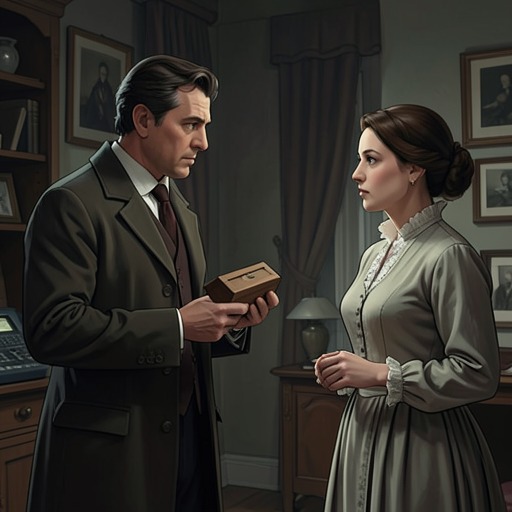
The visitor gives a specific method: hold the paw in the right hand and wish aloud. He warns the family about the consequences, but does not provide a formula, conditions for interpreting a wish, or safeguards against an unwanted fulfillment. When the family later remembers that only one of their wishes has been used, the remaining wishes become a practical possibility. Mr. White’s subsequent wish for his son to live again confirms that a spoken wish can be made through the paw; it does not establish that the result will be benign or that the wisher can dictate the form it takes.
Fulfillment and Cost
The rules’ most consequential demonstration begins with the family’s first wish for two hundred pounds. The money arrives as compensation after Herbert is caught in machinery and killed. The payment thus fulfills the requested amount through a loss that makes the money inseparable from grief. The story presents this outcome as a concrete example of the warning about interference with fate, while leaving the exact supernatural mechanism behind the accident and compensation unexplained.
After Herbert’s burial, his parents live through days of silence and exhausted resignation. When Mrs. White recalls that two wishes remain, she urges her husband to wish their son alive again. Mr. White resists: Herbert has been dead ten days, and his father says he could recognize him only by his clothing. His fear gives the rule about consequences a bodily and intimate dimension. The danger is no longer merely the possibility of losing money or suffering an abstract reversal; it is that a successful wish might return their child in a terrible state.
Mr. White nevertheless raises the paw and wishes aloud for his son to live again. The talisman falls to the floor, and the couple wait without any immediate sign that the wish has worked. A quiet knock eventually sounds at the front door. While Mrs. White tries to reach the bolt, Mr. White searches frantically for the paw and makes his third and last wish. The knocking stops; when the door is opened, the road outside is quiet and deserted. The final wish’s exact wording is not supplied, and the ending does not explain whether the knocks came from Herbert. It shows, instead, the parents acting under the pressure of a feared fulfillment and using their remaining control to end the immediate threat.
Narrative Function and Ambiguity
The wish rules provide a compact structure for the story’s escalating reversals: a limited number of wishes, a simple spoken procedure, an explicit warning, and consequences that arrive in forms the characters cannot govern. The first wish turns an ordinary sum of money into the price of Herbert’s death. The second sets grief against the possibility of a horrifying return. The last is made in panic as the knocking grows more insistent, and its effect is registered through silence and the empty road rather than an explanation of what stood outside.
This arrangement makes the rules more than a set of fantasy mechanics. Their central promise—that fate resists interference—remains the visitor’s account of the paw’s purpose, while the events give that claim grim support without fully proving a knowable system of supernatural cause and effect. The paw appears to answer wishes, yet its means of fulfillment and the identity of the presence at the door remain uncertain. The governing lesson is therefore inseparable from the characters’ inability to know what a wish will do before they speak it: the method is explicit, but mastery is not.